




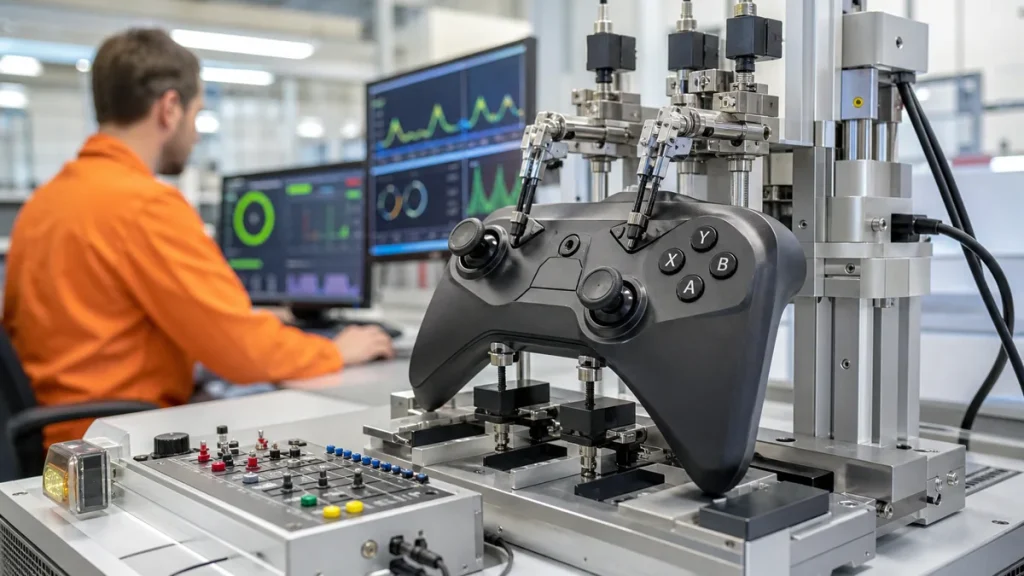
QUALITY CONTROL
A controller may look attractive but still fail because of drifting joysticks, inconsistent buttons, unstable wireless connections or charging problems. Structured testing helps manufacturers identify these risks before products reach customers.
Functional and Compatibility Testing
Every button, trigger, joystick, vibration motor and connection mode should be checked. Testing should cover the intended platforms and verify pairing, reconnection, response and key mapping.
Joystick Calibration
Calibration checks center position, movement range, dead zones and output consistency. Poor calibration can cause movement without user input or prevent accurate control. Test data should remain within the agreed product specification.
Button and Trigger Life Tests
Automated presses simulate repeated use and help verify mechanical durability. Buyers should confirm the required test cycle and acceptance criteria, especially for shoulder buttons and triggers that receive frequent pressure.
Wireless, Battery and Charging Tests
Wireless models should be checked for connection distance, latency, interference, pairing and stability. Battery capacity, charging current, charging time and protection functions should also be verified.
Appearance and Packaging Inspection
Final inspection covers scratches, color differences, assembly gaps, printing position, accessories, labels and packaging. Drop or vibration testing may be added to evaluate shipment protection.
Quality control is most effective when it begins with clear specifications and continues through materials, assembly, testing and final packing.