

USER EXPERIENCE
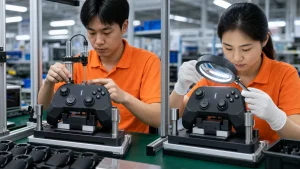
Button feel is created by travel, actuation force, rebound speed, cap shape, membrane or switch structure and housing tolerance.
Consistent button feedback improves control and perceived quality, while uneven force or slow rebound can lead to complaints.
The fastest route to a poor decision is to approve gaming controller button feel through a single headline number. Experienced buyers create a short decision framework instead: intended user, must-pass functions, acceptable cosmetic range, test evidence and commercial boundary. That framework makes later supplier discussions far more precise.
Why a Button Can Feel Premium or Cheap
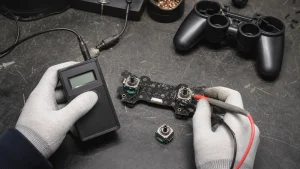
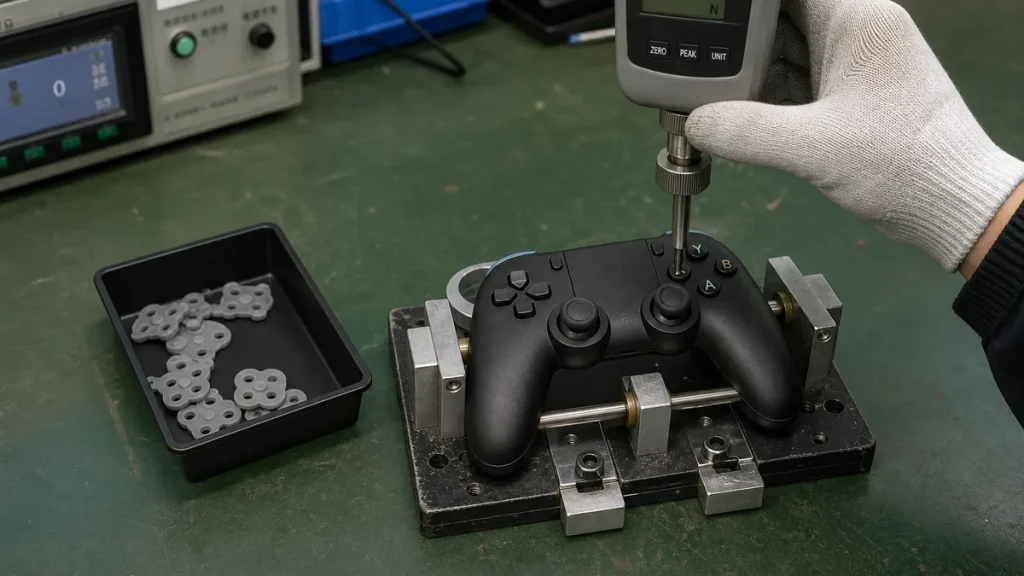
Evaluate actuation force, travel, sound, rebound, life-cycle performance, cap alignment and consistency across production samples.
Three documents help: a concise specification, a marked approval sample and a test record. The specification defines intent, the sample captures details that words miss, and the record proves key functions. Together they create a stronger boundary than a long message thread with scattered comments. Applied to gaming controller button feel, this turns a broad preference into evidence that can be reviewed during sampling and checked again during production.
Tolerance Stacks Behind Uneven Feedback
Changing button structures may require new components or tooling, but force and sound can often be adjusted on an existing platform.
Forecast volume changes the sensible engineering route. A small market test benefits from an existing platform and reversible customization. A proven high-volume program may justify dedicated tooling or components. Matching investment to evidence protects cash while leaving room for a stronger second generation. For gaming controller button feel, each commercial assumption should be recorded beside the technical option so later price comparisons remain meaningful.
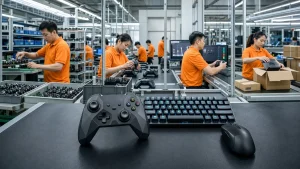
A useful factory checklist for gaming controller button feel follows the material from receiving to shipment. Confirm lot identity at incoming inspection, process parameters during assembly, functional results before packing and carton identity at the end of the line. Add a clear reaction plan for failures: stop, segregate, investigate and record the disposition. This sequence is more valuable than a long list of tests with no ownership. It shows how information moves and prevents questionable units from quietly returning to normal production.
Creating a Repeatable Feel Reference
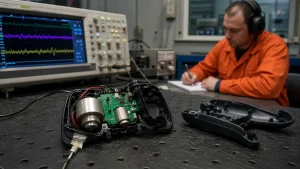
A capable OEM supplier can prepare comparison samples and conduct button response and mechanical-life testing.
Create a short sign-off sheet with ownership. Product management confirms the user experience, engineering confirms function, design confirms appearance and purchasing confirms commercial scope. Shared approval prevents one department from discovering an old unresolved issue after production has started. The approval record for gaming controller button feel should make that decision understandable to someone who did not participate in the original discussion.
At the pre-production meeting, walk through gaming controller button feel in the same order as the factory process. Confirm incoming material, assembly method, software or calibration where relevant, inspection fixture, packaging and lot identification. Assign an owner to every open point and set a closure date. If one item remains uncertain, decide whether it blocks production or can be verified during the pilot run. This approach turns a general ‘approved’ message into a controlled release and reduces the chance that different departments work from different assumptions.
Plan a More Reliable Gaming Controller Button Feel Project
A short written brief covering users, price position and critical checks will make a gaming controller button feel project easier to evaluate.