

KEYBOARD SOURCING
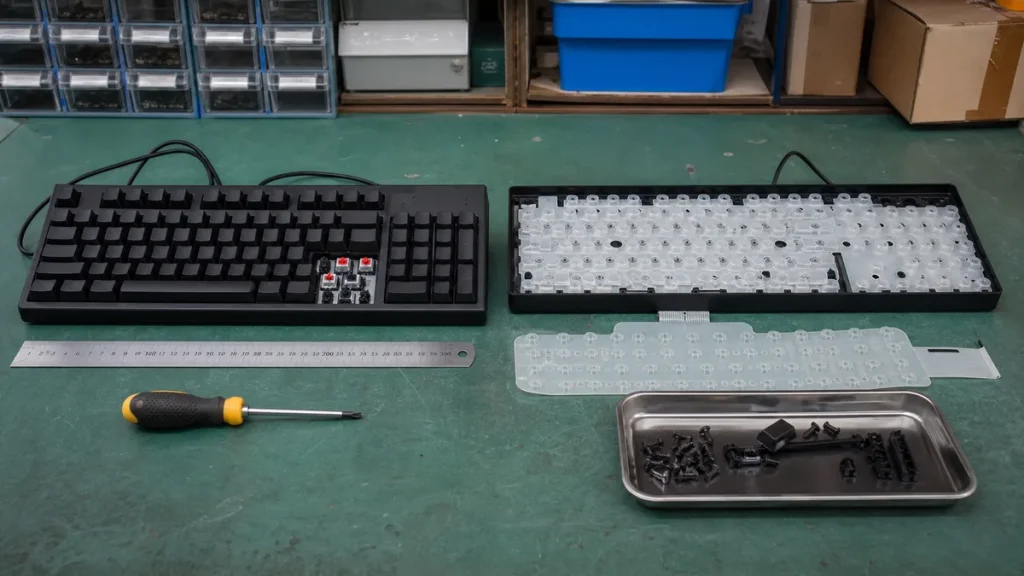
Mechanical keyboards use individual switches, while membrane keyboards use flexible contact layers beneath the keys.
The choice affects typing feel, sound, durability, product thickness, retail positioning and target price.
There is a persistent myth that mechanical and membrane gaming keyboards can be judged by choosing the highest available specification. In practice, a balanced design usually performs better commercially. Reliability, usability, supply continuity and honest claims all deserve a place beside the headline feature.
Two Keyboard Architectures, Not One Ranking
Compare switch feel, key rollover, operating force, noise, repairability, lighting and the expectations of the target market.
A premium claim should survive ordinary use, not only a controlled demonstration. For mechanical and membrane gaming keyboards, ask how performance changes after repeated operation, transport and normal environmental exposure. Durability evidence is especially valuable when the feature influences the product’s main selling point.
Match the Construction to the Selling Price
Mechanical models generally have higher component costs, while membrane models can support value-focused product lines and larger promotions.
Avoid paying for specifications that customers cannot recognize or that the finished device cannot consistently demonstrate. Product positioning should connect each cost increase to a user benefit, a reliability improvement or a credible sales claim. Otherwise complexity grows without strengthening the offer. For mechanical and membrane gaming keyboards, each commercial assumption should be recorded beside the technical option so later price comparisons remain meaningful.
It is easy to treat factory capability as a machine list, yet mechanical and membrane gaming keyboards also depends on people and documentation. Equipment can generate measurements, but someone must maintain the fixture, interpret the limit and respond to abnormal trends. During supplier evaluation, look for records that connect an issue to corrective action. The most convincing evidence is not a perfectly clean report; it is a controlled process that notices variation early, explains its cause and demonstrates that the correction remained effective on subsequent output.
Questions to Resolve Before Requesting Samples
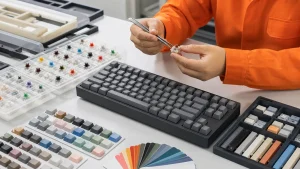
An experienced OEM/ODM manufacturer can provide samples and customization options for layouts, colors, lighting, keycaps and packaging.
Claims should be written only after evidence is available. If a feature depends on a specific test condition, state it accurately. Responsible wording protects the brand, reduces customer-support friction and gives the supplier a measurable standard to maintain. The approval record for mechanical and membrane gaming keyboards should make that decision understandable to someone who did not participate in the original discussion.
Marketing claims deserve a final technical check. Compare every statement related to mechanical and membrane gaming keyboards with the approved sample and test evidence. Remove unsupported superlatives and state conditions when they materially affect the result. Accurate claims are not weaker marketing; they create the right customer expectation and reduce avoidable returns. Keep the final specification sheet with the artwork file so future packaging revisions do not reintroduce an old number or feature that no longer matches the current production version.
Confirm the Commercial Direction for Mechanical And Membrane Gaming Keyboards
Use the approval sample as the reference point when discussing quantities, lead time and production controls for mechanical and membrane gaming keyboards.
To discuss a sample plan for mechanical and membrane gaming keyboards, message +86 186 6530 2196 by WhatsApp or WeChat.