

2017KEYBOARD TECHNOLOGY
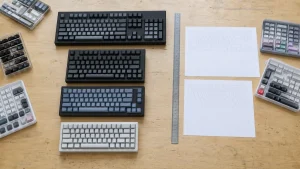
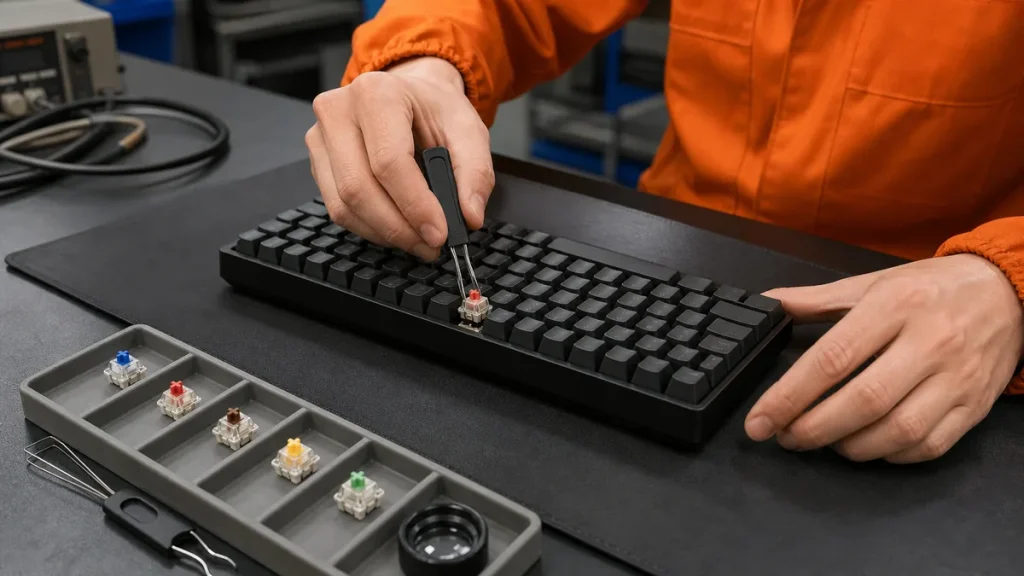
A hot-swappable keyboard allows users to replace compatible mechanical switches without soldering.
This feature adds customization value and can extend product life, but socket quality and PCB support must be carefully controlled.
Risk in hot-swappable gaming keyboards rarely arrives as one dramatic failure. It accumulates through small ambiguities: an undefined tolerance, a sample made from different material, an unrecorded firmware change or a test with no acceptance limit. Clear documentation converts those ambiguities into manageable decisions.
What the Socket Adds to the Product
Check supported switch types, socket retention, insertion cycles, PCB thickness, switch alignment and included tools.
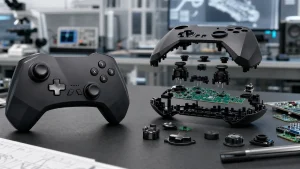
Failure analysis should begin with a defined symptom. Terms such as ‘unstable,’ ‘weak’ or ‘incorrect’ are not enough. Record when the issue occurs, how often it appears and which units show it. Specific evidence lets the factory trace hot-swappable gaming keyboards back to a component, process or setting.
The Failure Points Hidden Beneath the Switch
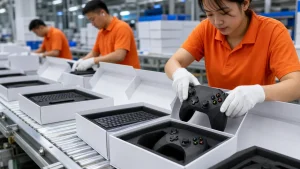
Hot-swap sockets increase component cost and require additional assembly and inspection controls.
Quality limits have a commercial effect. Extremely tight tolerances may require selection, slower processing or higher scrap. Loose limits may increase returns. The right boundary is neither automatically strict nor lenient; it reflects what users notice and what the manufacturing process can sustain. For hot-swappable gaming keyboards, each commercial assumption should be recorded beside the technical option so later price comparisons remain meaningful.
A risk-based approach concentrates control where failure would have the greatest effect. With hot-swappable gaming keyboards, a characteristic tied to safety, compatibility or the main selling claim deserves stronger evidence than a hidden cosmetic detail. This does not mean ignoring appearance; it means assigning inspection effort deliberately. Define critical points, likely failure modes and detection methods before production. The resulting plan is easier to explain to inspectors and more defensible when a buyer must decide whether a deviation requires rework, concession or rejection.
A Practical Hot-Swap Validation Routine
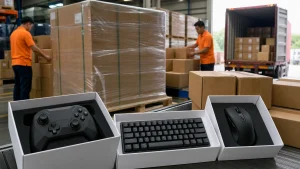
A reliable production partner can provide platform options, switch samples and testing for socket fit, key response and durability.
When a defect appears, preserve the sample and its lot information. Reproducing the problem is more valuable than debating responsibility from photographs alone. A structured return path helps both parties improve hot-swappable gaming keyboards and prevents repeated failures from being treated as isolated incidents.
Build escalation rules before they are needed. Define who is contacted when hot-swappable gaming keyboards fails during production, what quantity triggers a stop, which evidence the supplier sends and who can authorize a concession. Without these rules, schedule pressure can turn a technical deviation into an argument. A pre-agreed response protects both sides: the factory avoids waiting for unclear instructions, and the buyer retains control over changes that could affect customers, certification or the core product promise.
Reduce Uncertainty Around Hot-Swappable Gaming Keyboards
Ask suppliers to explain how the proposed hot-swappable gaming keyboards specification will be verified on finished production units.
For pricing and feasibility questions related to hot-swappable gaming keyboards, contact +86 186 6530 2196.