

CONTROLLER TECHNOLOGY
Controller feedback systems use motors or actuators to create physical responses that match in-game events.
Motor type, position, weight and firmware control influence vibration strength, noise, power consumption and the overall user experience.
Engineers tend to view controller vibration and haptic feedback as a system rather than a feature. Interfaces, tolerances and firmware or material behavior can change the result after final assembly. The practical question is not whether a component sounds impressive, but whether the finished device behaves consistently across real production samples.
Two Motor Families, Two Different Experiences
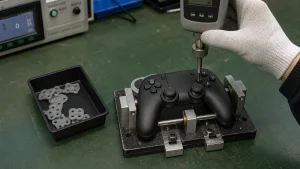
Confirm motor type, vibration intensity, left-right balance, operating noise, mounting security and power requirements.
A strong engineering review asks where variation enters the process. It may come from material lots, molded dimensions, component positioning, assembly force or software settings. Once the likely sources are known, inspection can be placed at the step where correction is still practical rather than only at final packing. Applied to controller vibration and haptic feedback, this turns a broad preference into evidence that can be reviewed during sampling and checked again during production.
Mounting Position Changes the Result
Stronger or more advanced feedback can increase component cost, battery consumption and firmware development work.
Lead time should include decision time as well as factory time. Unapproved artwork, uncertain specifications and repeated sample comments can consume more calendar days than assembly. A buyer who returns consolidated feedback quickly has more influence over delivery than one who only requests an aggressive ship date. For controller vibration and haptic feedback, each commercial assumption should be recorded beside the technical option so later price comparisons remain meaningful.
The engineering handover to production deserves its own review. Prototype technicians can compensate for small issues through care and experience, whereas a normal line must produce the same result repeatedly at speed. For controller vibration and haptic feedback, fixtures, torque settings, calibration files and inspection frequency should be ready before the first large batch. A pilot run is useful because it tests the manufacturing method, not merely the product design. Yield and rework data from that run can reveal whether the proposed process is stable enough to scale.
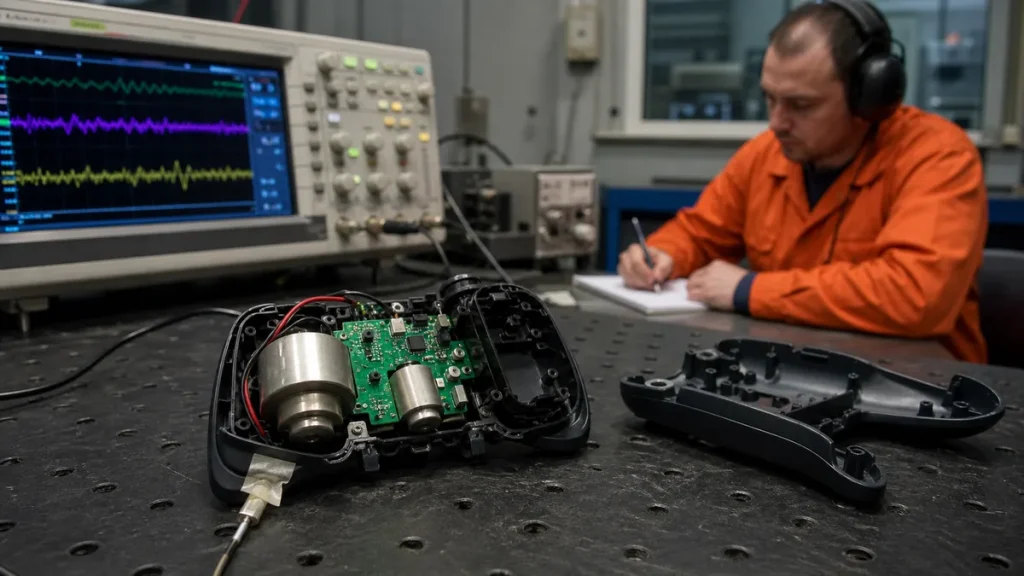
Listening for Problems Before Users Do
A reliable production partner can recommend feedback solutions and test vibration consistency, noise and power performance during development.
The first production batch deserves closer observation than a mature repeat order. Review yield, defect patterns and packing feedback before scaling volume. Early data may reveal a small process adjustment that protects later orders without requiring a redesign. The approval record for controller vibration and haptic feedback should make that decision understandable to someone who did not participate in the original discussion.
For sample evaluation, prepare a simple scorecard rather than relying on memory. Give separate ratings to function, consistency, appearance, documentation and commercial fit. Add observations from more than one user when controller vibration and haptic feedback affects feel or comfort. Do not average away a critical failure; mark must-pass items separately. A scorecard makes internal discussion faster and produces cleaner feedback for the factory. It also creates a record of why one option was selected when the project is reviewed months later.
Define the Next Step for Controller Vibration And Haptic Feedback
Before requesting a final quotation, align the technical specification, packaging scope and test plan for controller vibration and haptic feedback.
Share the target quantity and requirements for controller vibration and haptic feedback at info@rayforandy.com.